WannaCry Analysis(Malware)
NOTE
With estimates over 100,000 computers impacted globally thus far, many people received unwelcome notes Friday similar to those below demanding a fee to decrypt their files. While the notes promise to return the data, it’s not guaranteed that paying the ransom will return data safely, but if it gets this far and adequate backups are not in place, it may be the only recourse the victim has. No one ever wants to see one of these.
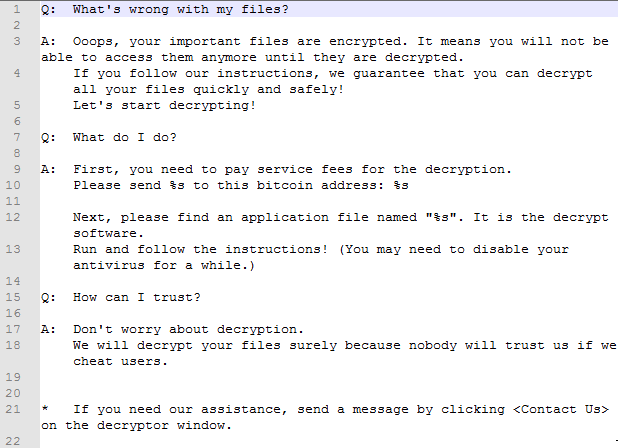 Figure 1: Ransom Note
Technical Summary
SHA256 24d004a104d4d54034dbcffc2a4b19a11f39008a575aa614ea04703480b1022c/ MD5 Db349b97c37d22f5ea1d1841e3c89eb4 from VirusTotal. It consists of two parts: stage-0 executable and an unpacked stage-2 encryption and worm program. It first attempts to contact its kill switch URL (hxxps://iuqerfsodp9ifjaposdfjhgosurijfaewrwergwea.com). If the URL is alive it does not execute. If the URL is not found then the malware unpacks tasksche.exe and creates a service to start tasksche.exe on startup. This executable encrypts all the files, and popup ransom window and changes the background of Desktop. It creates a random folder inside C:\ProgramData with some random naming to store all the wannacry files. It exploits the EternalBlue vulnerability on port 445(SMB) to spread to other computers. Initial executable runs and checks if the kill switch url is alive or not. If it is alive then stops the execution and if not it unpacks the persistance binary tasksche.exe. Tasksche.exe was residing in a randomly named directory inside ProgramData which tries to spread over network using port 445 to infect other computers by encrypting all files and ransom popup window.
Static Analysis
Basic
On running floss on the executable its shows modules used to open a url and service name used, kill switch url, and randomly named path which is likely used to store the unpacked data of ransomware.
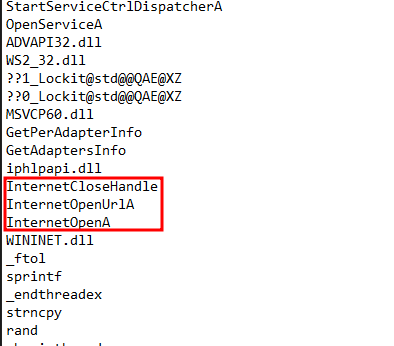 Figure 2: Network Modules
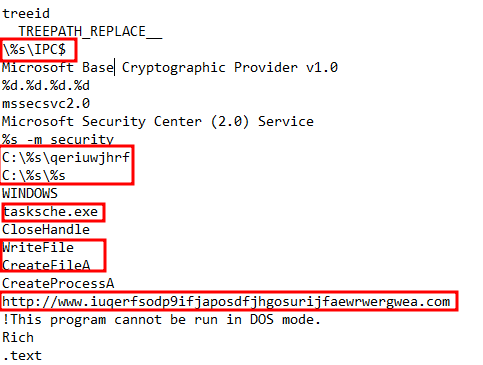 Figure 3: Service name, kill switch url, random path
Then it shows commands used, icacls used to modify the access control of files and attrib +h . used to hide the file attributes and a string WNcry@2ol7 which look like a password.
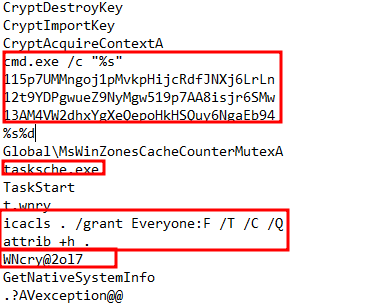 Figure 4: commands, modifying access control, hiding file attrib, password
Here is list of all imports which include certain socket, Read/write file, and many other modules utilised by this executable.
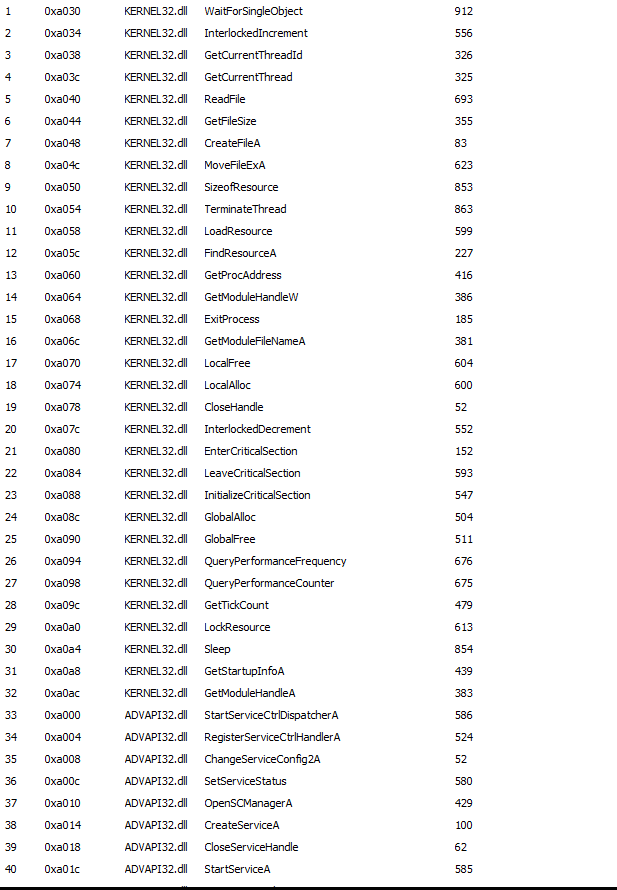 Figure 5: Import_1
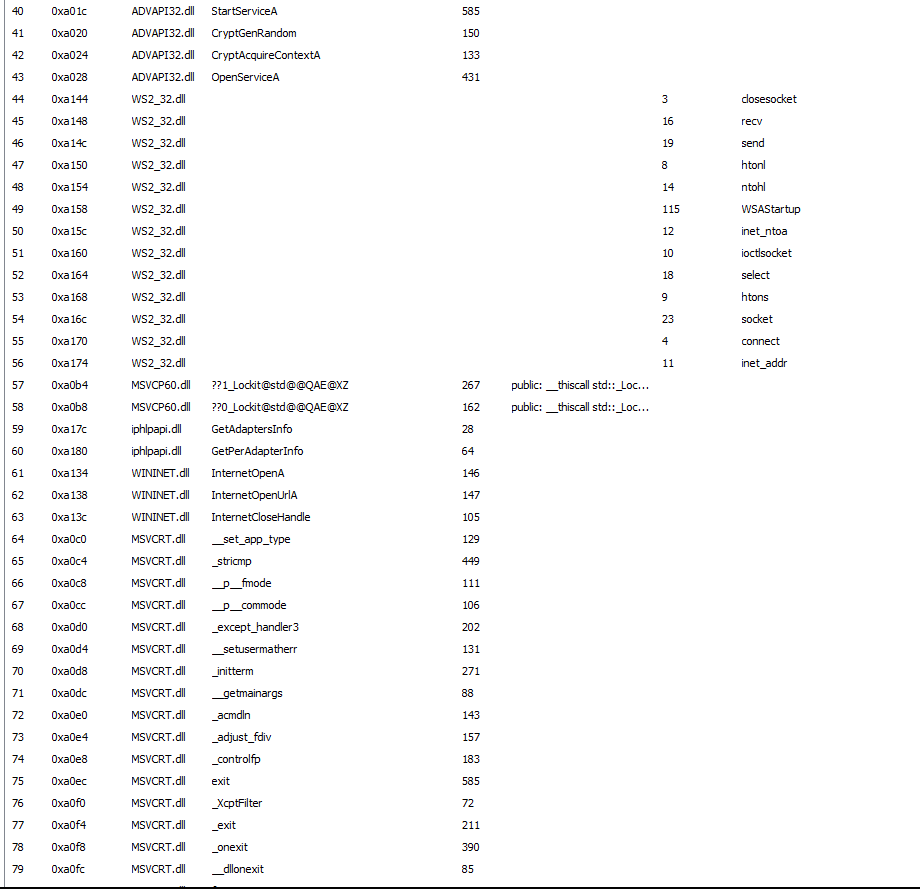 Figure 6: Import_2
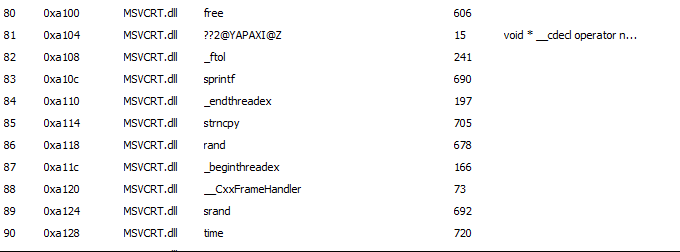 Figure 7: Import_3
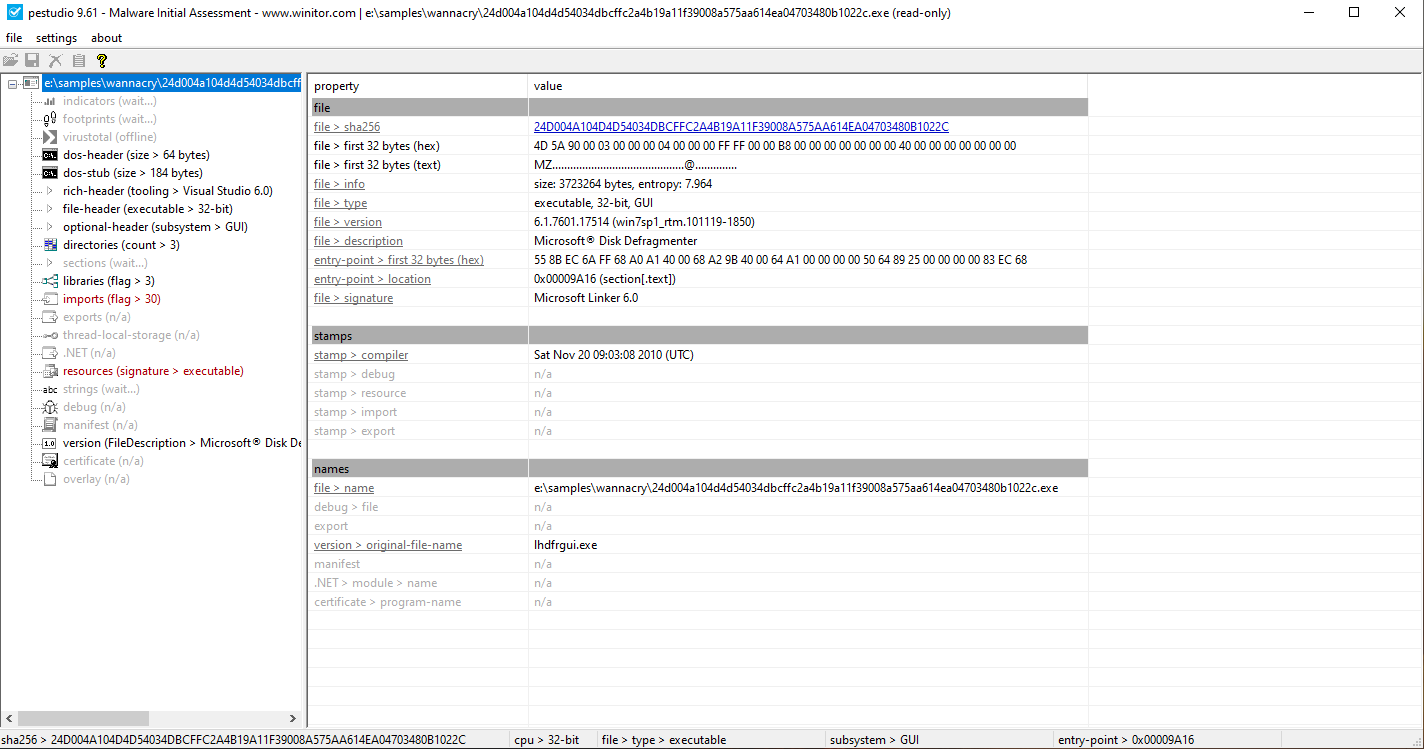 Figure 8: Information from pestudio
Advanced
On viewing the assembly code in IDA it shows that the binary first tries to connect with the kill switch url if that returned anything other than zero it means the url is active and working so binary stops its execution there otherwise calls a function sub_408090.
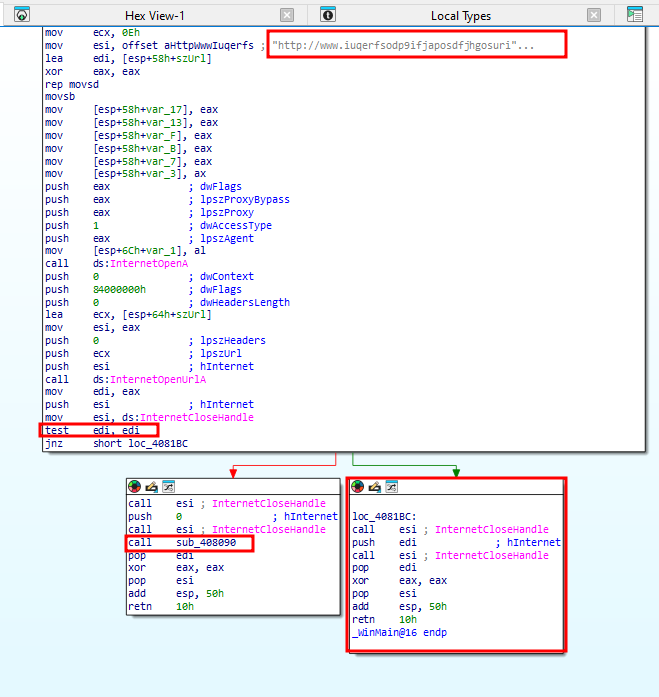 Figure 9: Assembly code in IDA
Dynamic Analysis
With fakenet running and wireshark opened when i executed the binary, it made a DNS query to url www.iuqerfsodp9ifjaposdfjhgosurijfaewrwergwea.com to check if its alive or not.
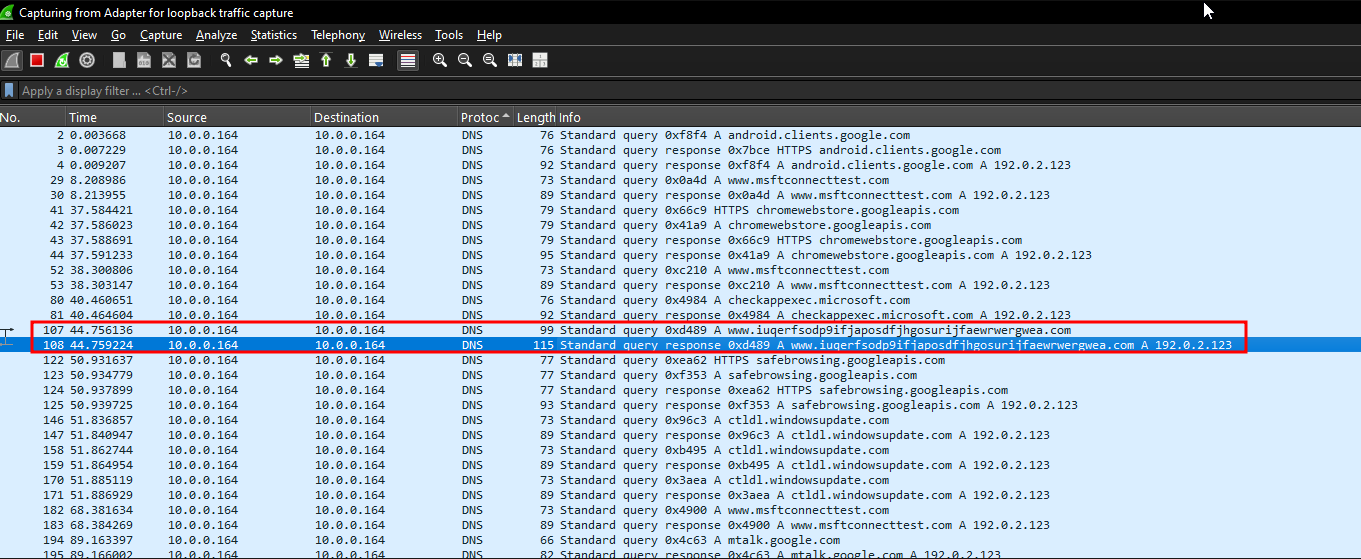 Figure 10: DNS Query to kill switch
It created a random directory named dyxbnfbi618 in ProgramData which is staging area of rasomware files and start encrypting all the files in the system.
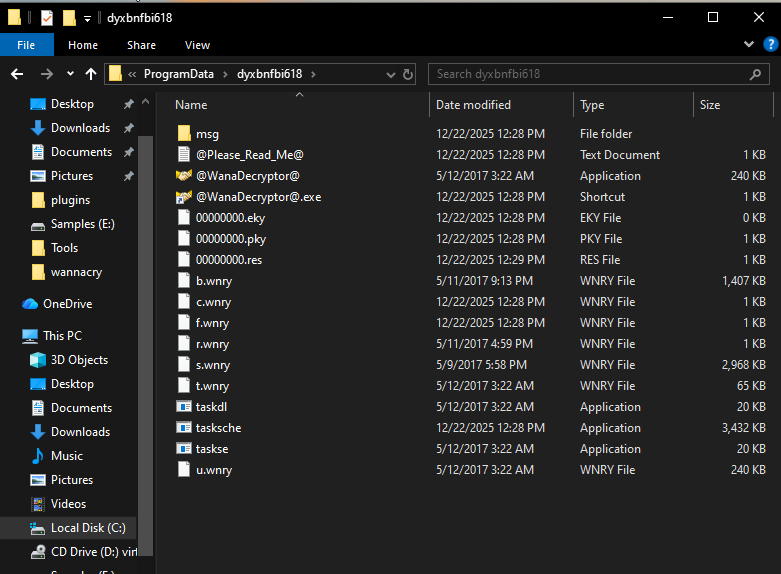 Figure 11: Staging area of ransomware files
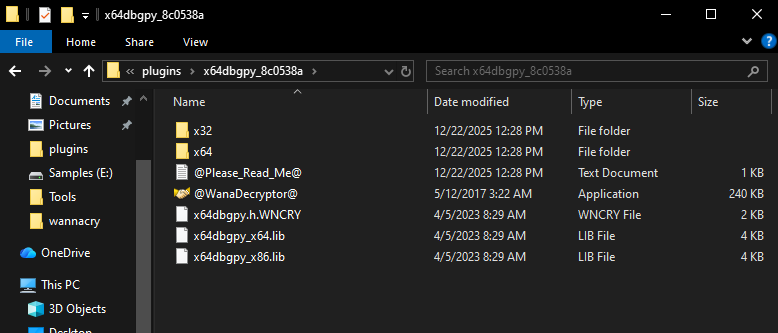 Figure 12: Encrypts every file
Using tasksche.exe it creates a service named same as the random directory which invokes tasksche.exe on startup.
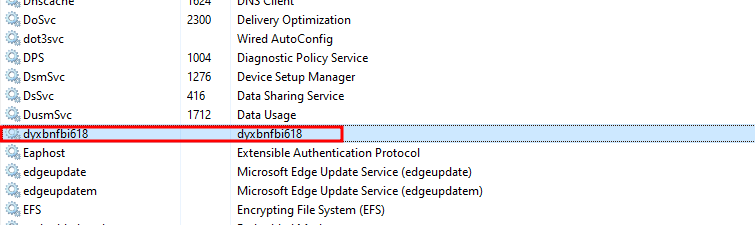 Figure 13: Service named randomly
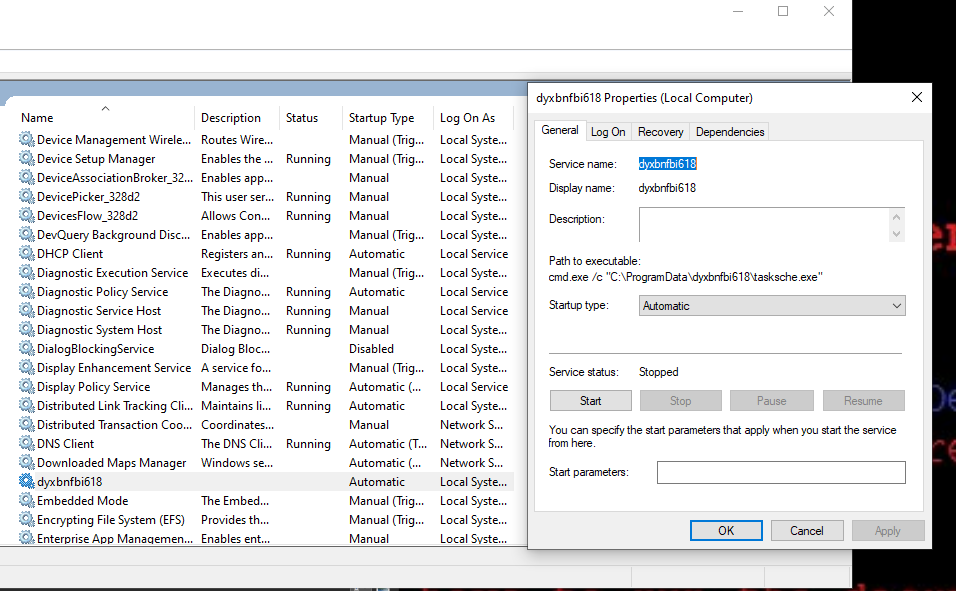 Figure 14: Service Properties
After infection it changes the background, encryptes all old files and popup a ransom payment window.
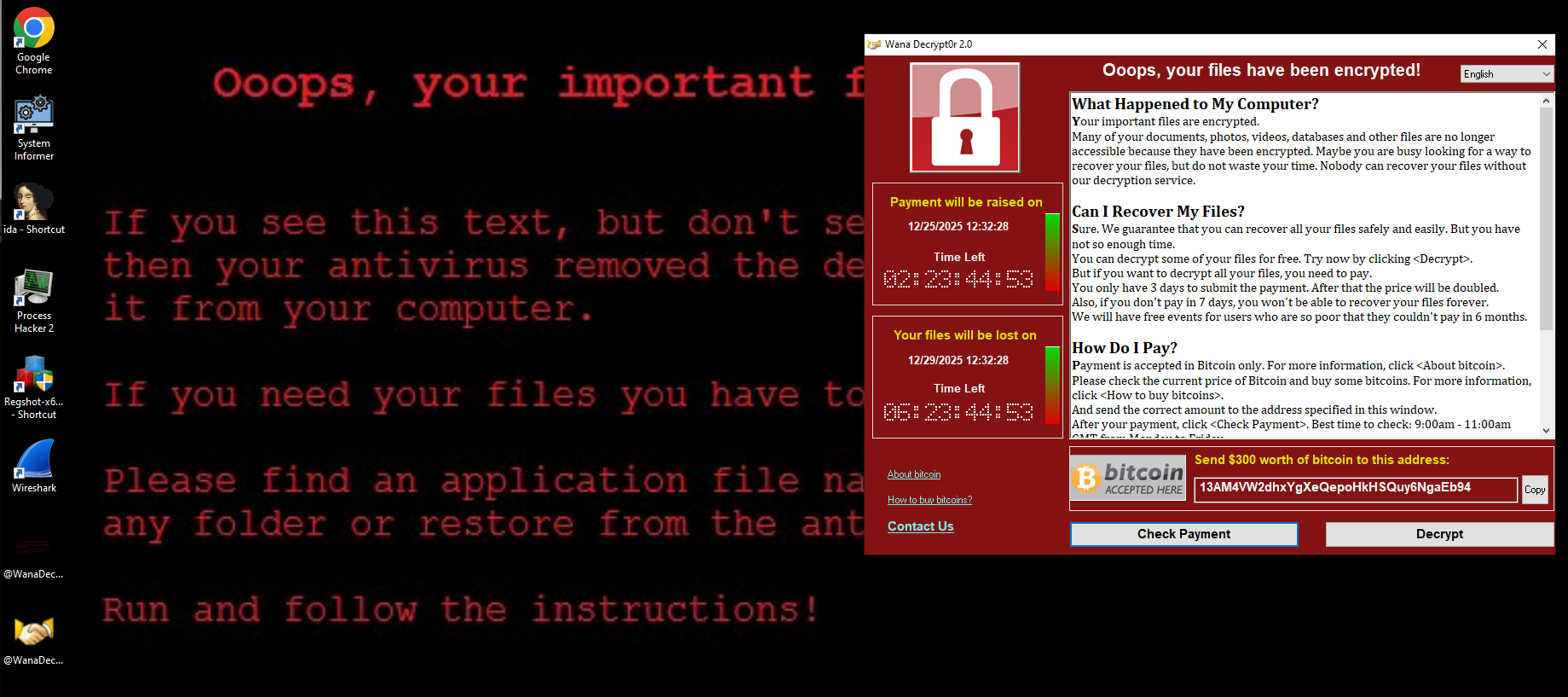 Figure 15: Ransom Window
IOCs
Figure 16: Connection to kill switch url
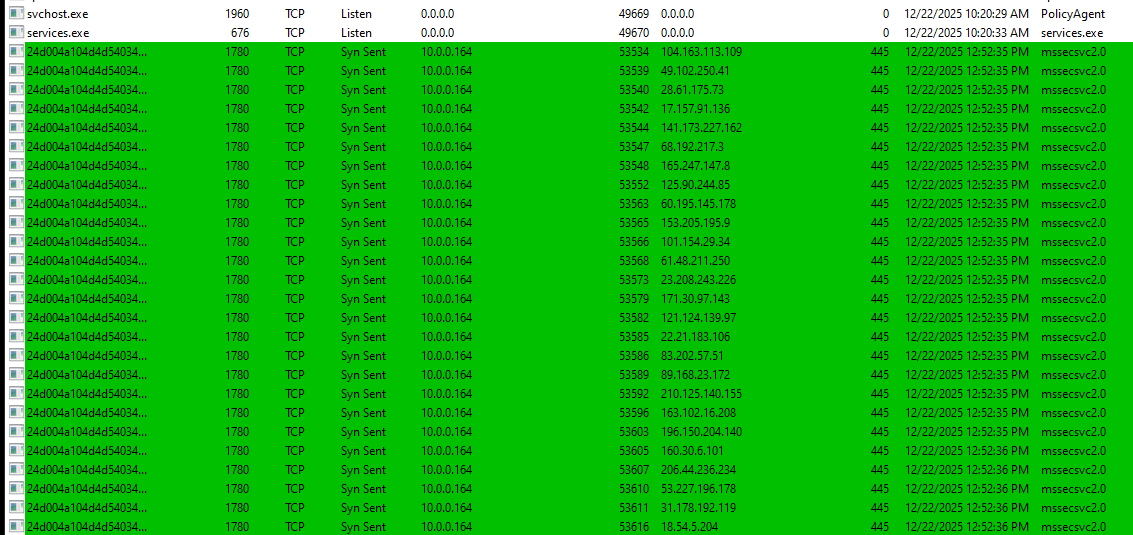 Figure 17: Locating other machine and exploiting with port 445
Rules and Signatures
rule Ransomware_WannaCry {
	meta:
		last_updated = "2025-12-18"
		author = "0xSec"
		description = "Yara Rule for WannaCry Ransomware"

	strings:
		$string1 = "attrib +h ." fullword ascii
		$cmd = "icacls . /grant Everyone:F /T /C /Q" fullword ascii
		$string3 = "C:\\%s\\dyxbnfbi618" fullword ascii
		$passwd = "WNcry@2ol7" fullword ascii
		$ext = "wnry" ascii
		$ext1 = "WNCRY" ascii
		$kill_switch = "www.iuqerfsodp9ifjaposdfjhgosurijfaewrwergwea.com" ascii
		$payload = "tasksche.exe" ascii
		$PE_magic_byte = "MZ"

	condition:
		$PE_magic_byte at 0 and
		($url or 1 of ($string*) or $payload)
}