NanoCore RAT Analysis
Background
Nanocore is a Remote Access Tool used to steal credentials and to spy on cameras. It as been used for a while by numerous criminal actors as well as by nation state threat actors e.g. The Gorgon Group, APT33.
SAMPLE - sha256 da551ab6e000732499227a67f2be68d1256b58d95963a903cc316e2730db9d1e
Static Analysis - Stage 1
On analyzing the hash in virustotal I found out that it was marked malicious by 54 vendors and in malware bazaar it was detected by 19 vendors as of now. And its a multi stage malware further revealing configs of malware and its key details
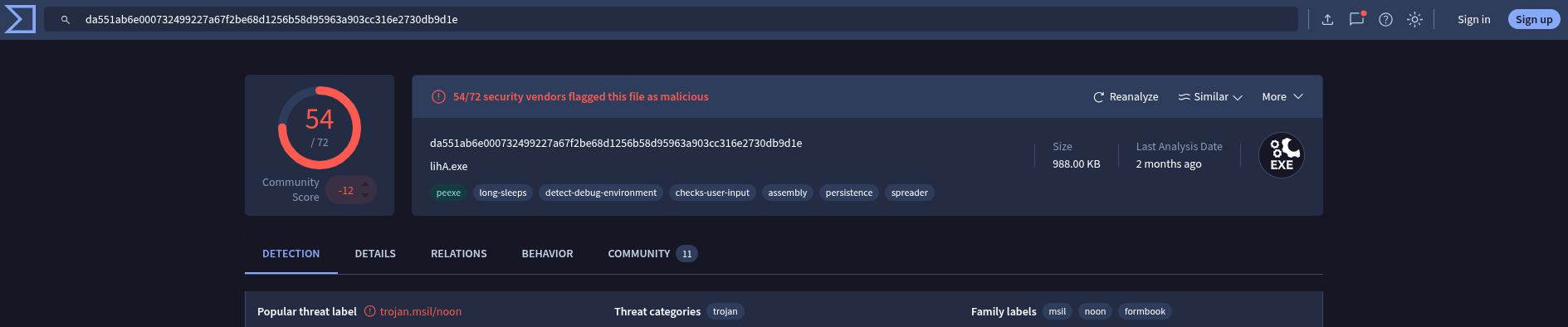 Figure 1: Virustotal
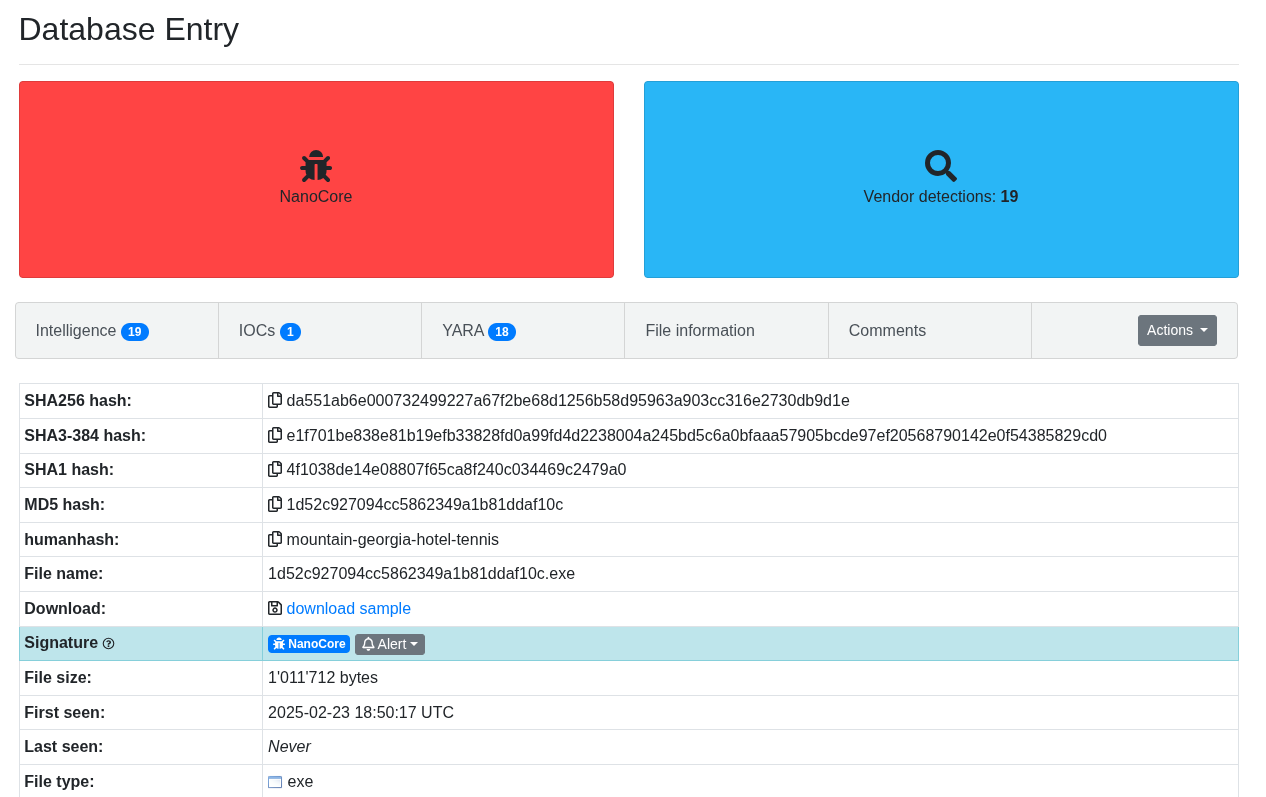 Figure 2: Malware Bazaar
At first, I used DIE to gather information of binary and it showed that initial binary was packed and is using C# and .NET.
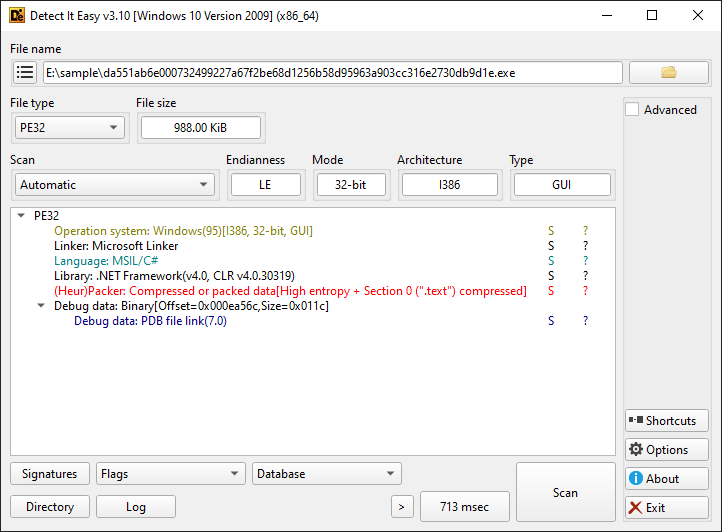 Figure 3: Detect It Easy
After that I analyzed the binary with CAPA which gave me hint of presence of anti analysis techniques and that this binary is only initial stage.
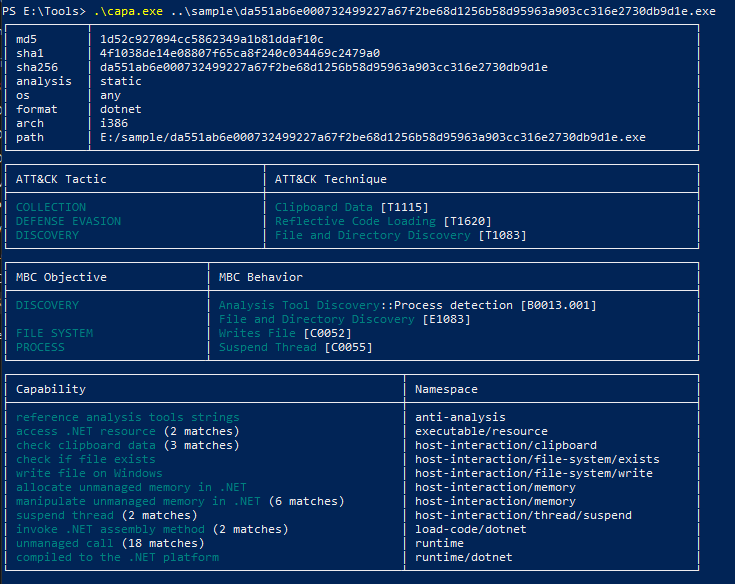 Figure 4: CAPA hints anti analysis techniques
Since this malware includes anti-debugging techniques, which makes it challenging to extract next stage malware so I have to take dynamic approach for this.
Dynamic Analysis - Stage 1
I will be using pe-sieve to see any malicious implants by the stage 1 binary. After running it i got 2 files which are malicious and it dumped a dll and a exe file which was likely stage 2 malware.
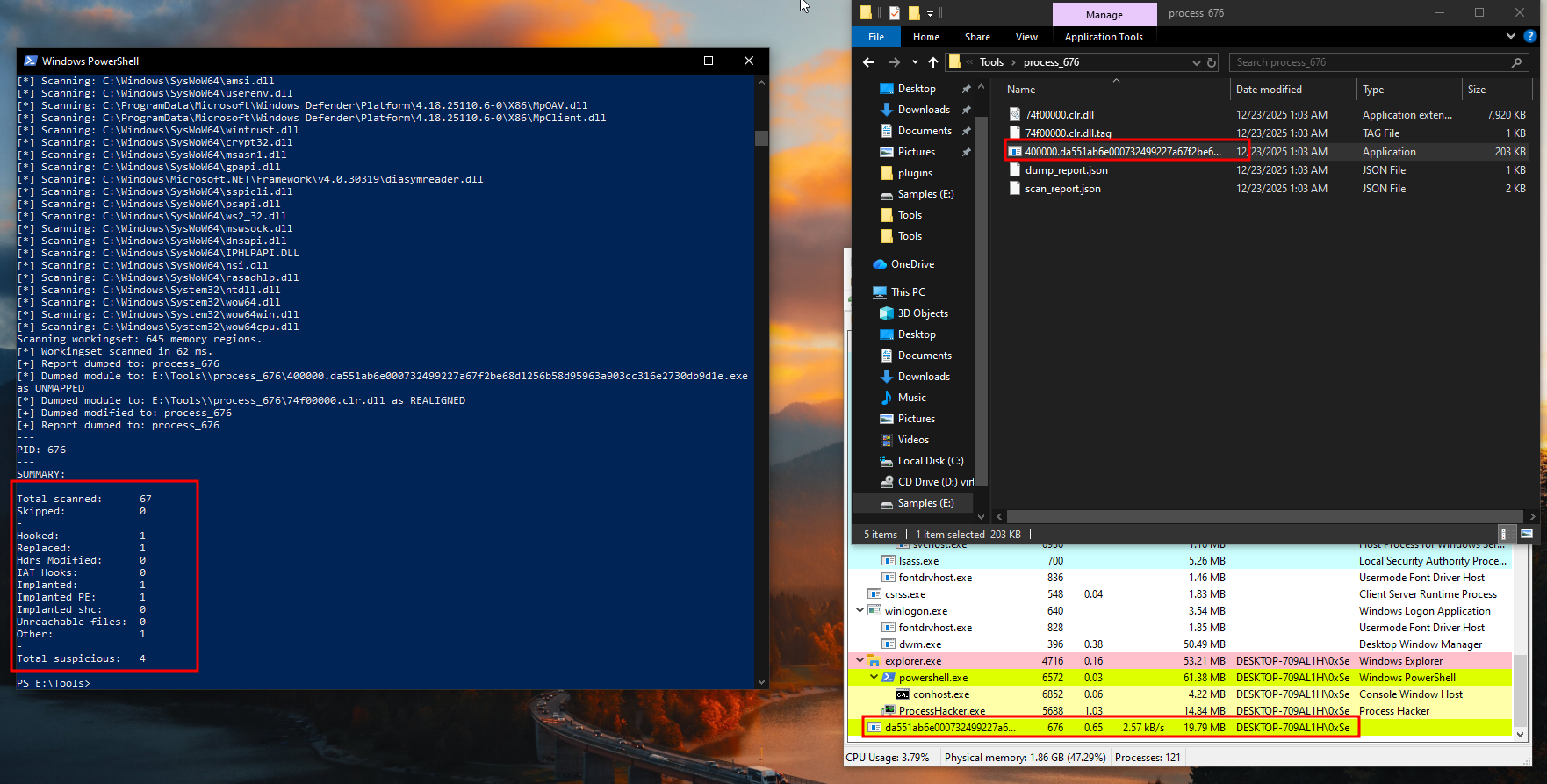 Figure 5: Extracting stage 2 malware dynamically
Static Analysis - Stage 2
Now analyzing stage 2 PE binary with DIE, CAPA, like tools. With DIE, it showed that this binary is written in .NET and is protected by Eazfuscator which is used to obfuscate .NET code to prevent reverse engineering and analysis.
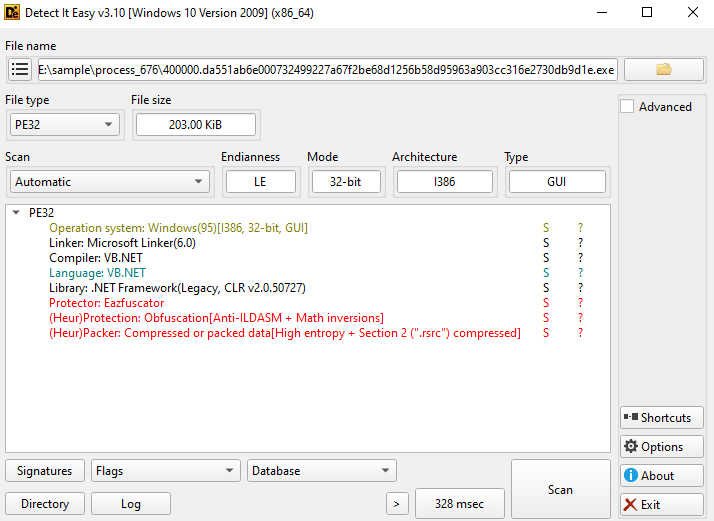 Figure 6: Analyzing stage 2 malware
CAPA’s output gave more detail about the binary including its behaviour and techniques like Command and Control, DNS Communication etc.
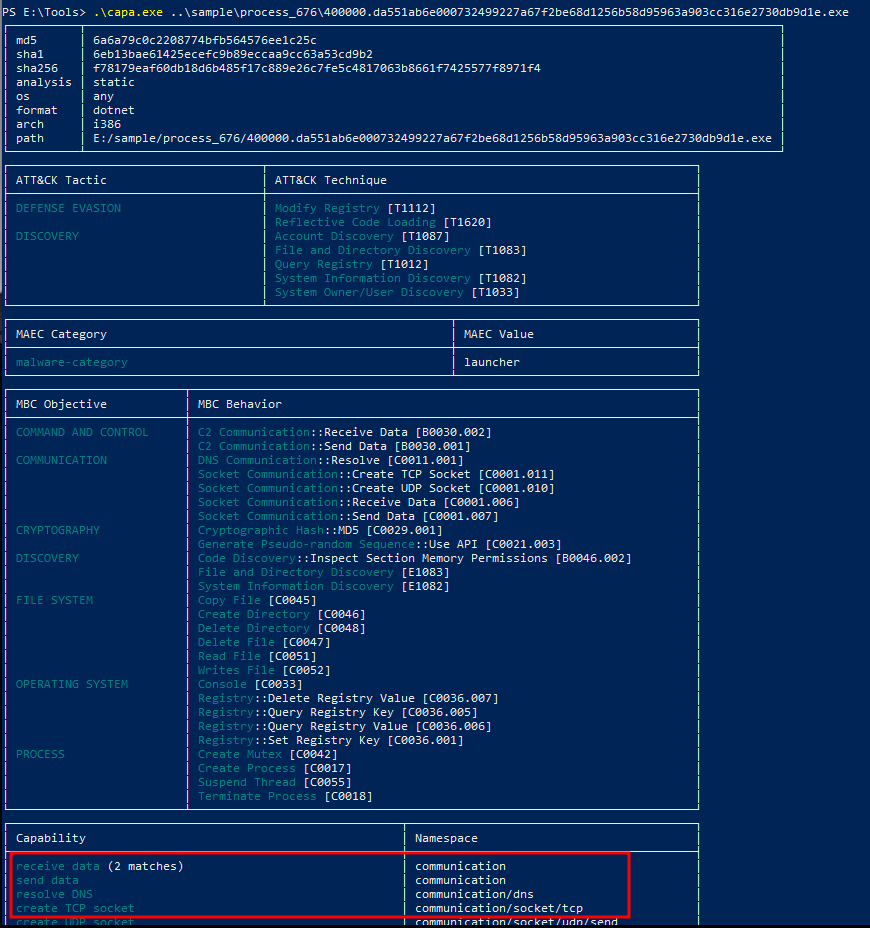 Figure 7: Technique and Behaviour of stage 2 malware
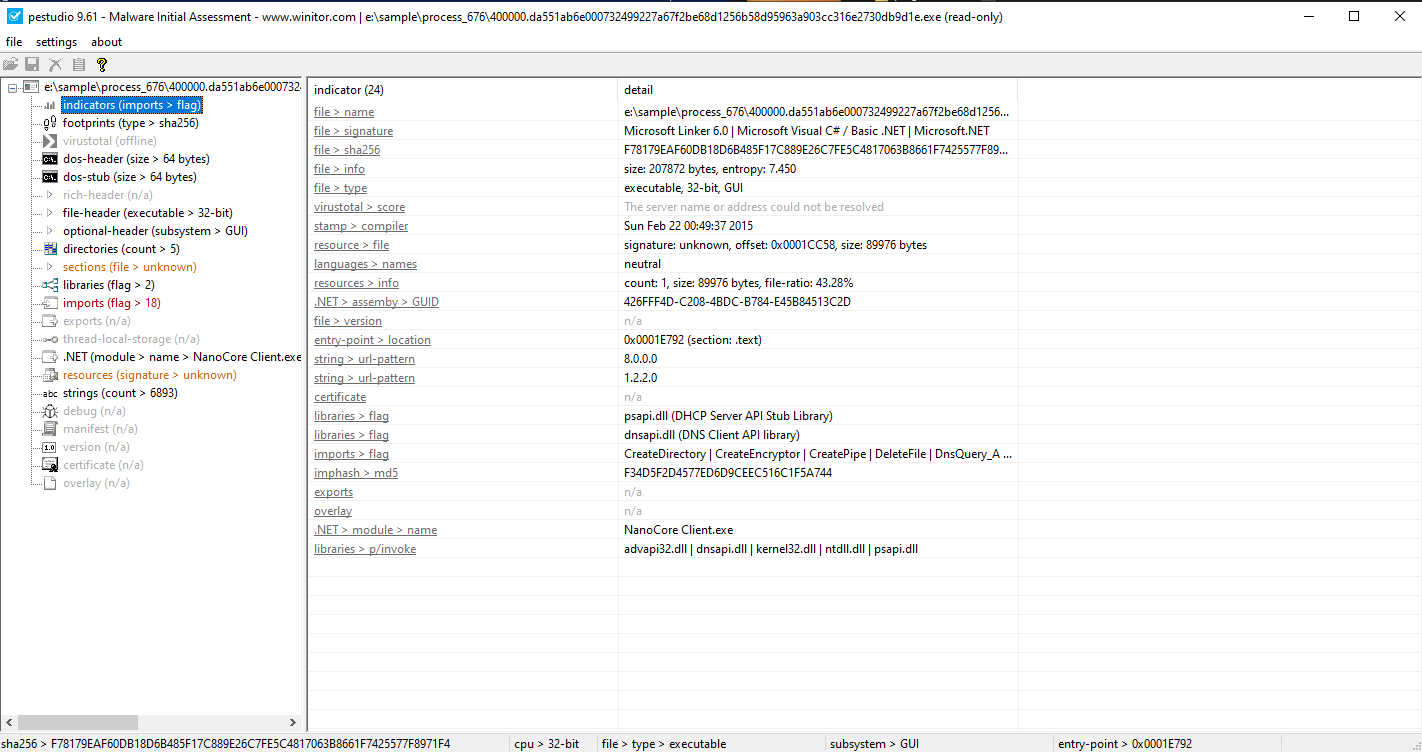 Figure 8: PEStudio output of stage 2 malware
After this i loaded the binary into dnSpy a decompiler for .NET binaries which lets me analyze the binary more deeply and i found the entry point of program in ClientLoaderForm.
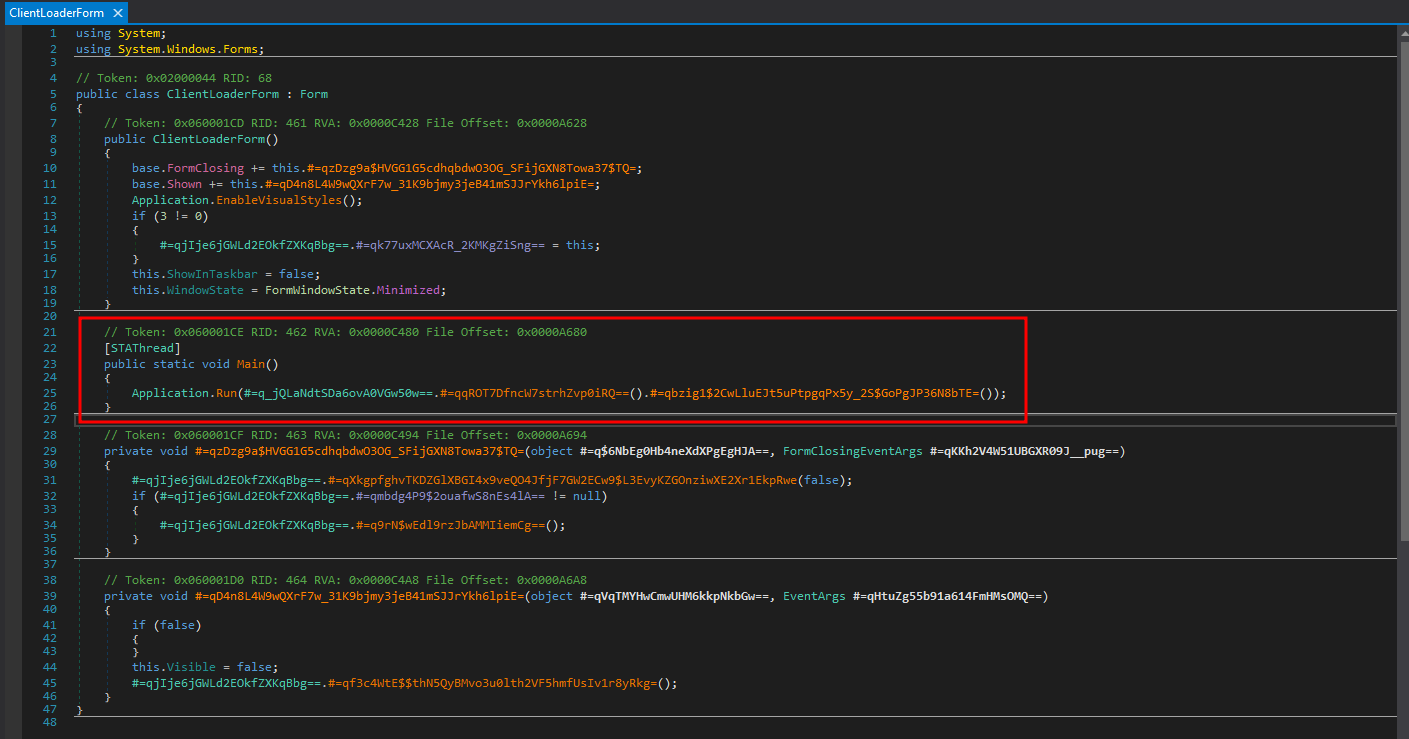 Figure 9: Entry Point of program
After a lot of debugging I finally managed to get the malware configurations including C2 host, port, run on startup, mutex etc.
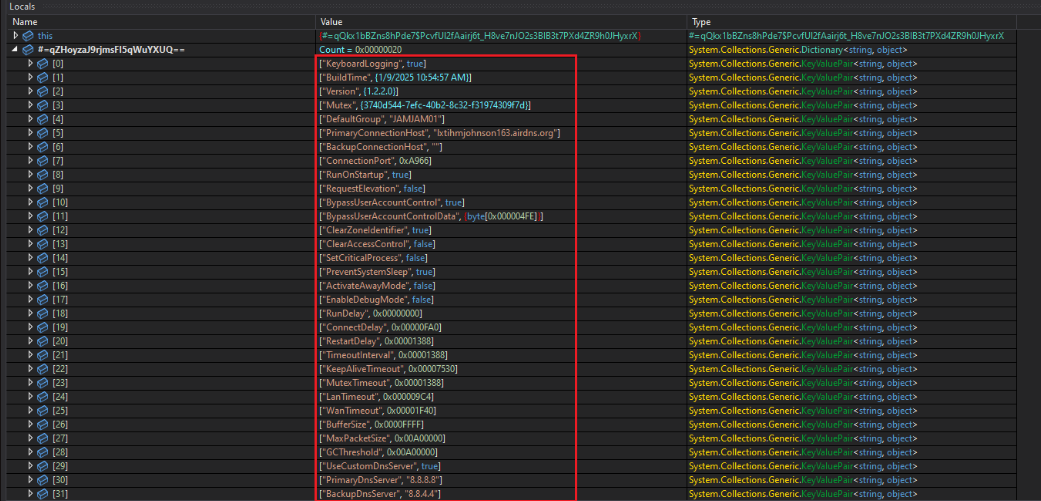 Figure 10: Malware Configuration
Dynamic Analysis - Stage 2
After running the malware it tried to establish a connection to a remote address 192.0.2.123 via port 43366 which is the typical behaviour of a RAT. In the network section we can see that it also makes a DNS query to domain lxtihmjohnson163.airdns.org.
 Figure 11: Connection to a remote address
 Figure 12: DNS query to C2 domain
After the system restarts the malware executes with a different name and location using name ddpss.exe to impersonate as a legitimate process as company name is Melvin Fengels.
 Figure 13: After restart it executes as legitimate name
and it can be seen also in registry using Autorun that it was added on Logon i.e. whenever system restarts it executes the malware under name DDP System.
 Figure 14: New registry under Logon
IOCs
Hashes
1
2
da551ab6e000732499227a67f2be68d1256b58d95963a903cc316e2730db9d1e -> Stage 1
f78179eaf60db18d6b485f17c889e26c7fe5c4817063b8661f7425577f8971f4 -> Stage 2
Domains lxtihmjohnson163.airdns.org
IP 192.0.2.123